Editor's Choice: Best Casual Stealth Game

Color Arenas · Map Intelligence

Master every Paint-Splattered Arena in Paint Hide & Seek

Explore immersive Color Arenas built around swirling paint trails, tight stealth routes, and playful hazards. Learn how each map shapes the chase before your next match begins.

3 core arena biomes
Dynamic walls & cover
Trail-based paint physics

Immersive Color Arenas Overview

Arenas built for creative stealth and paint-fueled chase stories

Colorsihush breaks down every major Paint Hide & Seek arena so casual players in Canada can instantly read the map, anticipate paint flows, and pick smart hiding lines before the opening countdown hits zero.

Top-down overview of Paint Hide & Seek arena with colorful paint trails and maze-like walls

Immersive Color Arenas Overview

Paint Hide & Seek arenas are compact, layered playgrounds that reward quick reads and creative movement. Each map mixes narrow choke points, open paint plazas, and curved corridors, forcing you to constantly weigh stealth against speed.

Across all arenas, three design pillars stand out: strong color identity for instant orientation, generous vertical and lateral cover, and paint trails that reveal the story of the last few seconds of action. Our arena breakdowns spotlight those pillars in motion so you can make better decisions in real time.


Signature Color Biomes

Maze of Magenta, Cyan Chambers, and Yellow Splash Gardens

Each core biome is tuned around a signature paint color and a distinct stealth rhythm, from looping magenta corridors to sunlit yellow courtyards.

Maze of Magenta

Looping stealth playground

Navigate chaotic, looping corridors laced with vivid magenta paint splatters. The Maze of Magenta funnels players through semi-regular patterns, but cleverly placed alcoves, pillars, and dead-end pockets allow stealth experts to vanish in plain sight.

Look for side corridors that bend just out of the main line of sight: these are your reset spaces. As a hider, you can duck into them to break visual contact, then cut back across fresh magenta trails to mislead pursuers. As a hunter, watch for overlapping paint streaks on intersections – they reveal where players are doubling back.

  • Best for jukes and mind games
  • High density of hiding niches
  • Great for practicing trail-reading

Cyan Chambers

Rhythmic open & closed zones

Cyan Chambers mixes cool blue-lit rooms with connecting tunnels, creating a rhythm of safety and exposure. Bright cyan paint floods the floors, making every step part of a visible puzzle for both hiders and hunters.

Open chambers tilt in favour of coordinated team sweeps, while the connecting choke points favour quick solo escapes. Skilled players treat each chamber as a mini-stage: reset your plan on every transition, and use the cyan paint pools near exits as early warning systems for incoming footsteps.

  • Strong sight lines for hunters
  • Predictable rotation paths
  • Ideal for duo coordination

Yellow Splash Gardens

Interactive courtyard chaos
Yellow paint-filled garden arena with courtyards and interactive objects in Paint Hide & Seek

Yellow Splash Gardens is built around sunlit courtyards, planters, and playful interactive objects. Yellow paint pools collect around ramps and slides, changing chase dynamics the moment someone sprints through them.

Use vertical elements like low walls and garden boxes to quickly break line-of-sight. Hiders can chain short hops between objects, while hunters benefit from circling the outer ring to cut off escape routes from the central plaza.

  • Interactive objects shape routes
  • Great for sprint & slide plays
  • High replay variety per match

Dynamic Arena Evolution

Moving walls, shifting cover, and living paint physics

Paint Hide & Seek arenas never stay completely static. Dynamic elements reshape sight lines while paint physics leave long-lasting clues that reward observant players.

Dynamic Arena Evolution

From rotating pillars to sliding wall segments, many arenas subtly transform as each round progresses. These moving pieces close off comfortable loops and open up surprise shortcuts, creating a living maze that feels new even after dozens of matches.

Colorsihush recommends tracking “update ticks” – small sound or visual cues that hint when an arena is about to shift. If you know a favorite hiding lane is on a timer, you can abandon it just before it becomes a dead end, flipping the pressure onto unsuspecting opponents.

When studying an arena, note which routes stay stable and which are temporary. Stable lanes are your safe fallback paths, while evolving routes are ideal for high-risk outplays.

Paint Physics Showdown

Every arena leans into accurate paint splatter physics. Trails cling to floors, walls, and corners, documenting the last few moments of movement like a living replay. Hunters can trace overlapping splatters to predict direction changes, while hiders can deliberately double back to scramble that story.

Smart players treat paint as both a signal and a smokescreen. Lure opponents through narrow corridors, then burst into an open area where multiple paint paths intersect – the confusion buys you precious seconds to vanish behind new cover.

Hiding Spot Deep Dive

Secret nooks, crawlspaces, and camouflaged alcoves

Across all maps, certain hiding archetypes appear again and again – once you learn to read them, every arena starts to feel familiar.

Anchor Corners

Anchor corners sit just outside the default camera angle, usually at the end of long hallways or behind chunky props. They let hiders vanish without stepping too far from the main route.

Use anchor corners as mid-chase pit stops: duck in, wait a beat for footsteps to pass, then rotate into a secondary lane. Hunters should pre-aim these corners whenever following a dense paint trail.

Crawlspaces & Underpasses

Low-clearance zones like vents, tunnels, and under-bridge gaps create asymmetric options. Smaller characters and careful pathing can turn these into one-way filters that shake larger or slower pursuers.

Because these spots often sit below obvious sight lines, they are perfect for early-round hiding or rotation breaks. Hunters can counter by learning the handful of crawlspace entrances per arena and regularly sweeping them.

Camouflaged Alcoves

Bright paint patterns and decorative props frequently disguise shallow alcoves. Once splattered, these recesses blend into the wall, hiding both character silhouettes and older trails.

To farm extra time in camouflaged alcoves, move as little as possible and let the visual noise do the work. When on the hunt, pay extra attention to alcoves that sit just off major intersections – they are high-value ambush points.

Environmental Hazards

Paint traps, puddle slides, and confetti chaos

Every arena layers in playful environmental hazards that can flip the outcome of a chase in a single step.

Environmental paint hazards with traps, slides, and confetti bursts in Paint Hide & Seek

Environmental Hazards

Paint traps, puddle slides, and surprise confetti bursts keep rounds unpredictable. Hazards are usually placed at junctions, near power-up spawns, or along high-traffic shortcuts where players are most likely to commit to a single route.

Hiders can weaponise hazards by baiting pursuers through risky tiles before cutting into safer side lanes. Hunters, meanwhile, can learn “hazard triangles” – clusters of traps that allow you to herd opponents into bad options.

Colorsihush arena maps mark these hotspots clearly, helping Canadian players quickly memorise which corners to respect and which to exploit.

Arena Strategy Tips

To truly master each arena, think in three layers: macro layout, live sight lines, and last-10-seconds paint history. Macro layout tells you where objectives and safe loops are, sight lines reveal where you can be seen, and paint history shows where players just were.

On new maps, start by running outer rings to understand their perimeter, then phase inward to learn choke points and vertical cover. Once comfortable, practice chase drills: deliberately run a loop, then run it again taking alternative exits to see how much time you gain or lose.

Canadian Player Insights

Spotlight: Player-Voted Favorite Arenas

Colorsihush aggregates community feedback from Canadian casual players to highlight the most beloved and challenging Paint Hide & Seek arenas.

#1 Fan Favorite Fun score: 9.6

Magenta Spiral Yard

Canadian players love the constant motion of Magenta Spiral Yard – a compact arena that twists corridors around a central spiral. Chase routes double back on themselves, creating endless jukes and narrow escapes.

Trail-heavy floors mean hunters can track recent loops, but hiders can still vanish by cutting through side pockets at just the right moment.

#2 Most Tactical Strategy: 9.4

Cyan Crosslink Halls

Cyan Crosslink Halls ranks high for tactical depth thanks to its crisscrossing chambers and clean sight lines. Teams who coordinate pincer sweeps can lock down sections of the map, while solo hiders thrive on timing and precision pathing.

Because paint trails stay visible in key choke points, reading floor patterns becomes a central late-game skill.

#3 Chaos Arena Replay: 9.1

Yellow Splash Terraces

Yellow Splash Terraces wins over players who love pure chaos. Stacked terraces, ramps, and garden boxes make every elevation change a new ambush angle, while yellow paint puddles accelerate or disrupt chases with comic unpredictability.

It is the perfect arena to showcase highlight-reel plays and wild last-second escapes.

Mini-Map Analytics

Preview obstacle placements before you queue

Mini-map analytics turn abstract arena names into clear mental models, so you can picture every rotation route before the match even loads.

Reading Mini-Map Icons

Paint Hide & Seek mini-maps use consistent iconography for walls, hazards, ramps, and cover. By learning this visual language, you can instantly spot safe loops, dead ends, and risky shortcuts.

Colorsihush recommends a quick three-second scan before the round: identify one safe rotation path, one emergency exit route, and one hazard cluster you can weaponise. This simple habit dramatically improves survival odds.

From Mini-Map to Movement Plan

Once you understand the mini-map, translate it into a movement plan: pick a starting quadrant, a mid-round fallback lane, and an endgame loop that hugs high-traffic zones for clutch outplays.

Over time, you will start seeing mini-map shapes – spirals, ladders, grids – that map directly to familiar arena archetypes, speeding up your learning curve on brand-new maps.

Expanding Map Catalog

New arenas, fresh twists, same playful stealth core

Each game update introduces new arenas and visual flourishes that expand the Color Arenas catalog while preserving the core hide-and-seek fantasy.

Expanding Map Catalog

Developers regularly add new arenas that remix existing biomes with fresh geometry. You may see magenta paint in a more vertical layout, cyan spaces with longer sight lines, or yellow gardens woven through multi-level terraces.

For Canadian players following Colorsihush, our arena catalog highlights how each new map fits into the broader ecosystem: which skills it reinforces, which hazards it favours, and how it reshapes the current meta.

Before you dive into the latest update, browse our summaries to pinpoint the arenas that best match your playstyle, whether you prefer sneaky hideouts or aggressive paint-chasing routes.

Concept art of colorful 3D Paint Hide & Seek arena showing paint trails and stealth-focused structures

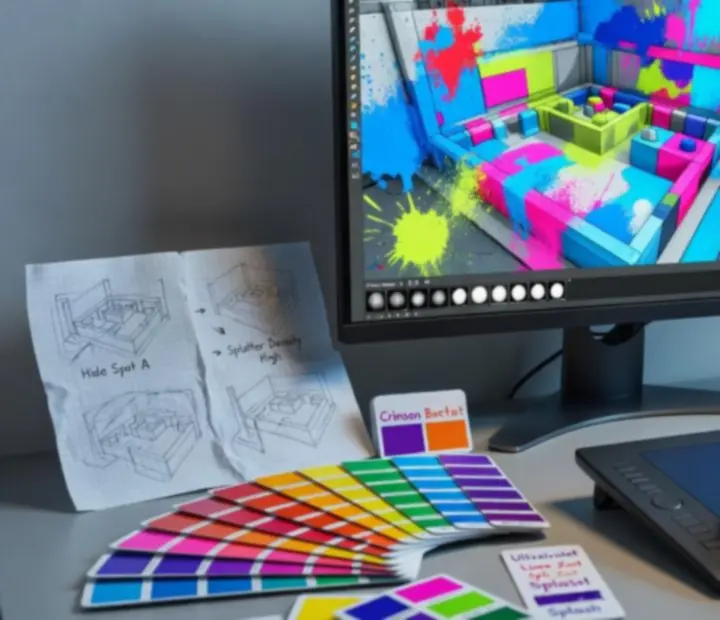
Arena Artistry

Behind every Color Arena sits a careful blend of color theory, 3D composition, and stealth game design. Bold magenta and cyan strokes direct your eye along intended routes, while darker pockets and soft gradients signal safe hiding spots.

Props, foliage, and environmental details are not just decoration – they are functional cover pieces shaping how hunters and hiders dance around each other. By paying attention to these artistic cues, you learn where designers expect the most exciting clashes to happen.

Queue into Color Arenas with a tactical head start

Use Colorsihush arena breakdowns to turn every paint splatter and hiding niche into an advantage. Study the layouts here, then jump into Paint Hide & Seek to put your new routes and jukes to the test.